
Night Cramps in the Calf and What Helps
A cramp grips your calf in the middle of the night and you are suddenly wide awake. These notes are written for Passaic and the surrounding northern New Jersey area, and this one starts at that moment. The NHS page on leg cramps is a plain companion read.
The first minute after it hits
You will probably stand up, flex your foot and wait for the muscle to let go. While you wait, notice two things: how long it lasts and which leg it is. Those details cost nothing and make a useful note later.
What a stretching habit can and cannot do
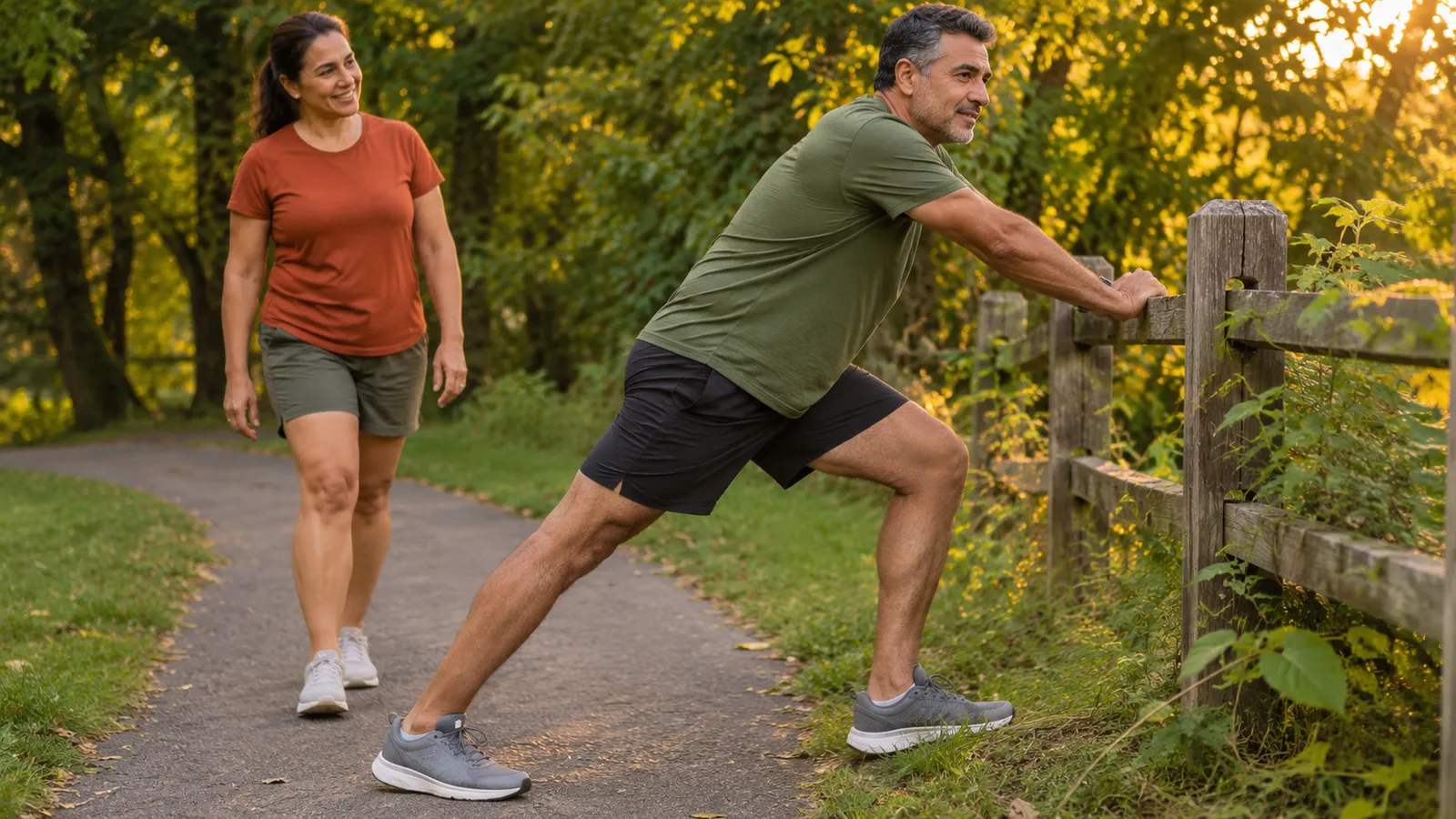
On calf stretching, the NHS is direct: "Regular calf-stretching exercises may help to reduce cramps but may not completely stop them from happening."
Read that as a modest promise. A stretching habit is worth trying, and the source does not say it will end the cramps. The MedlinePlus page on muscle spasms and charley horses is a second place to read about the same event.
Where the evening comes in
Timing is part of the answer in these notes. Before the next cramp, write down the evening that led to it: how long you sat, how long you stood and when you last stretched. Cold nights, a warm bedroom and a long day on your feet all belong in that record.
When it feels like an urge instead of a squeeze
Some nights the trouble is a pull to keep moving rather than a tight calf. If that sounds familiar, read the NHS page on restless legs syndrome. Our own note on restless legs syndrome basics covers it from this site's angle.
A plain note for the next few nights
Write down the date, the hour, which leg and how long it lasted. Keep it short, since a few lines in your phone are enough. The point is to replace a vague memory with something you can read back.
What to watch over the coming days
After a week or two, read the note back. If the same hour or the same leg keeps showing up, take the note to a clinician. If the urge to move appears in the same entries, the MedlinePlus page on restless legs is worth reading before that visit.